Two Years Later: The Recovery I Never Expected


I recently shared a video of my stroke story. I recorded it one year after my stroke, but I didn't watch it again until recently. I've told that story so many times now that I didn't expect it to hit me the way it did. But hearing it back in my own words was different. It was candid. Vulnerable. Hopeful. Heartbreaking. Honest.
That story was about surviving. Now it's time to tell a different story. This one is about surviving survival.
... It's been two years since my stroke.
When I think back to those early days in the hospital, I can't help but smile at how wildly unrealistic my expectations were! I genuinely believed that in a few weeks, maybe a couple of months at the most, I would be back to normal. Back to work. Back to running. Back to hiking. Back to life.
After all, that's how recovery works... isn't it? You get sick. You heal. You move on.
Now two years later, I know better.
If there's one thing my work with BrainStorm has taught me, it's that stroke survivors don't stop thinking about their stroke just because time passes. I've spoken with people whose strokes happened a year ago, 5 years ago, 20 years ago. It doesn't seem to matter how much time has passed. Certain dates, smells, songs, conversations, or even just a random Tuesday afternoon can transport them right back to the day their world changed.
Trauma has a way of leaving fingerprints. The stroke may have lasted minutes or hours, but its impact doesn't.
People often ask if I'm "better." It's a simple question with a complicated answer:
Am I better than I was lying in an ICU bed unable to walk? Absolutely.
Am I back to who I was before July 2024? Not even close.
For a long time, I believed recovery meant finding my way back to the person I used to be. Instead, recovery has required something much harder. It has required becoming someone new.
That realization didn't happen overnight. In fact, my identity was already shifting before my stroke ever happened.

For 20 years, my identity had been wrapped up in being "Mom." Like so many parents, I poured everything into raising my daughter. Then, almost overnight, I found myself becoming an empty nester. I was excited about the next chapter, but also trying to answer a question I think many parents eventually ask themselves: Who am I now?
At the same time, I had accepted a brand new role at work. After 23 years in one career path, I was stepping into a leadership position that challenged me in completely different ways. I was learning new systems, building new relationships, finding my confidence, and trying to prove (to myself as much as anyone else) that I belonged there.
It was all both very uncomfortable and exciting. It was exactly the kind of change that helps you grow. Then along came my stroke (because apparently life decided there wasn't enough change for one year) and all at once, I wasn't just figuring out who I was without a child living at home or what kind of leader I wanted to become, I was trying to figure out who I was inside a body that no longer felt like my own. That's a very different kind of identity crisis.
People often talk about what stroke survivors lose physically. They see the limp, the weak arm, the speech changes, the balance issues. What they don't talk about enough is that a stroke often steals your certainty about yourself:
The person who once knew exactly what they were capable of suddenly questions everything.
Can I still do this?
Will I ever feel like myself again?
I didn't just lose function, I lost certainty.
Most people think I'm doing well. I do (most of) the things I did before, and from the outside, that's what recovery looks like.
What people don't see is that every morning begins with the same quiet hope: Maybe today will be different. Maybe today I'll wake up and feel... good. For a few seconds after opening my eyes, I almost forget. Then I move.
The nerves on my left side begin humming. My foot reminds me it still doesn't move the way it used to. The muscle tightness settles in. The buzzing. The burning. The strange sensation of feeling both everything and nothing at the same time. Before I've even made coffee, I know what kind of day it's going to be. In 2 years, I haven't had a single day I'd rate higher than a 6/10 - and not because I'm unhappy, but because my body has never stopped reminding me that it survived something catastrophic.
The fatigue isn't the kind that disappears after a good night's sleep. The nerve pain doesn't take weekends off. Recovery isn't something I finished. It's something I wake up to every morning.

When people think about stroke recovery, they often picture learning to walk again. Learning to use your hand. Learning to speak. Don't get me wrong, those ARE incredible milestones, but they're only part of the story.
I wasn't prepared for the emotional recovery; the grief that comes from missing the person you used to be. The frustration of operating at what feels like 50% while the world expects 100. The guilt of cancelling plans because your brain is exhausted. The loneliness of having an invisible disability in a world that assumes you're "back to normal." The constant negotiation between accepting your limitations and refusing to let them define you.
That kind of recovery doesn't happen in a rehab gym. It happens quietly every day.
I think this has been the hardest lesson: For everyone else, life keeps moving.
Friends settle into routines. Families grow. Careers evolve. Plans are made without much thought, and they absolutely should! The world isn't supposed to stop because I had a stroke.
But mine did. Or at least, it changed direction.
While everyone else continued becoming more of who they already were, I found myself rebuilding from the ground up. Not just physically, but personally, professionally, emotionally, spiritually - even financially. I kept waiting to become the old me again. Instead, I was slowly meeting someone entirely different.
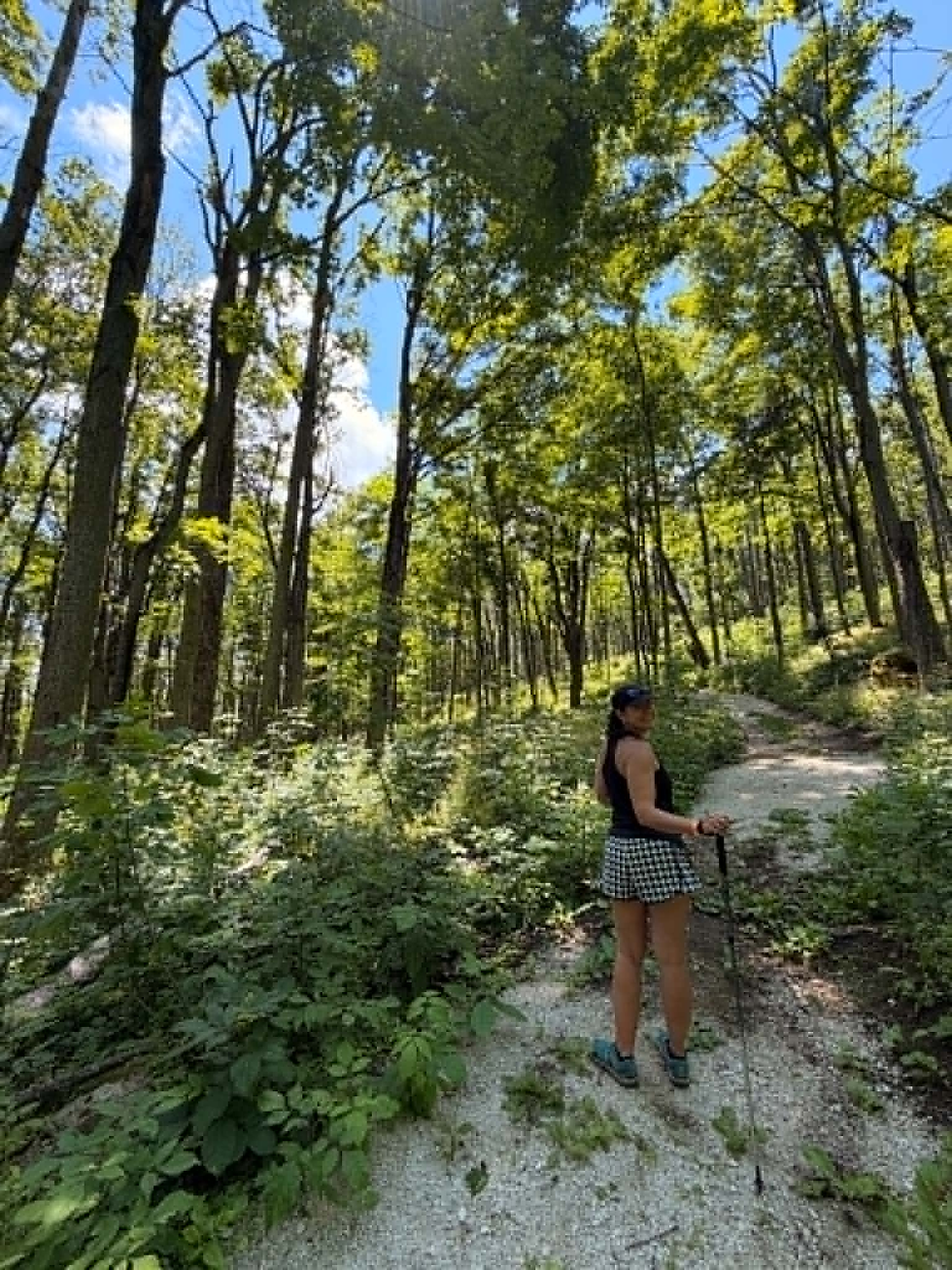
If you had asked me a year ago what recovery looked like, I probably would have answered with a list of everything I still couldn't do. Today, I see it a little differently.
This past year, I returned to the forest. I've gone hiking again. I try to get out for a walk almost every day. I went backcountry camping (something I once wondered if I'd ever do again). I even returned to the gym, this time with a full membership instead of wondering if I'd ever feel capable enough to use it.
None of those things look exactly the way they did before my stroke. I don't hike with the same speed or endurance. I don't

move with the same confidence. I have to be mindful of fatigue, balance, muscle tightness, and the reality that my body has different limits now. But I'm out there, and that's something I couldn't have imagined a year ago.
It's easy to compare my life today to the life I had before my stroke and feel like I've lost so much. But when I compare it to where I was a year ago, I see something entirely different.
I see progress. Not perfect progress. Not linear progress. And certainly not the kind of recovery I expected.
But progress nonetheless.
The biggest shift hasn't been physical. It's been learning to let go of the person I keep trying to get back to. For a long time, I believed recovery meant finding my way back to the woman I was before my stroke. Now I understand that recovery isn't about going backward. It's about moving forward.
I've had to let go of "who I was" and learn to embrace "who I am."
That doesn't mean I don't miss my old life. It means I've stopped believing that my best life can only exist in the past. I'm building a different life now; one that's slower in some ways, and harder in others, but it's still filled with forests, campfires, fresh air, movement, laughter, purpose, and hope.
Recovery isn't a finish line. We celebrate survivors for returning to work, for walking without assistance, for driving again, for crossing finish lines. Those victories absolutely deserve every bit of celebration they receive.
But I think we've unintentionally created the impression that recovery has an ending.
That one day, you're simply "recovered."
Recovery isn't something I completed; it's a relationship I continue to build with my body, my brain, and the person I've become. Some days I still grieve the life I lost. Some days I'm incredibly proud of the life I've built. Most days, both things are true at the same time.

2 years ago, I thought surviving my stroke would be the hardest part. It wasn't.
Learning to survive survival has been.
Despite everything, I still believe this: The stroke is part of my story. It shaped me. It changed me. It challenged every assumption I had about life and about myself.
But it doesn't get to write the ending.
That part is still mine.
My stroke story:
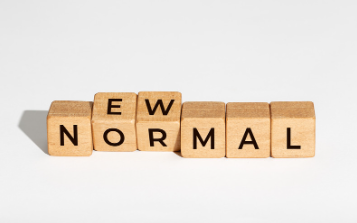


I just had a good cry reading this. It resonates deeply with me. I’m still struggling to let go of the old me and I know i am pushing myself way too hard to do things like I used to do trying so hard to be like the old me but I end up so fatigued and going backwards and some days feel
Like I may have had a tmi bc of this. I know I have to come to terms with the new me and that’s honestly the hardest thing I am
Struggling with right now. I’m so happy Sue pointed me in the right direction to you. Everything you write I can relate too. Big hugs. You are…